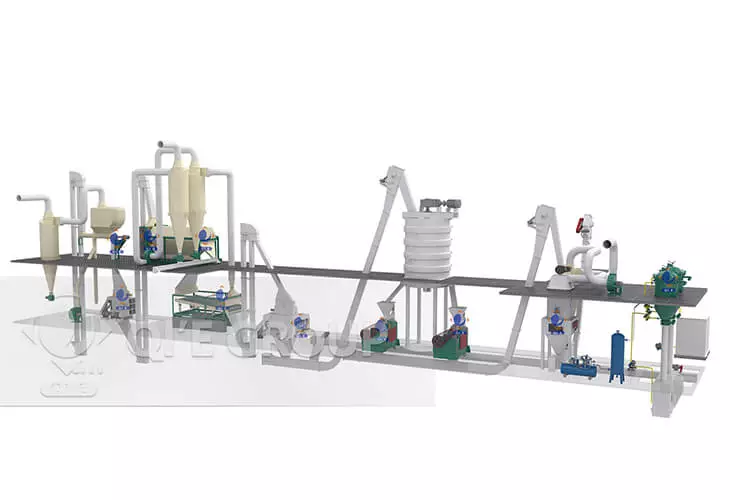
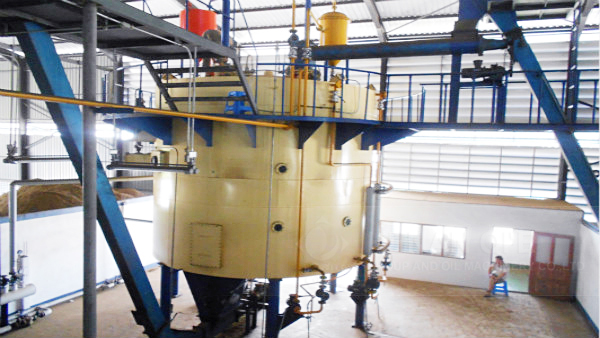
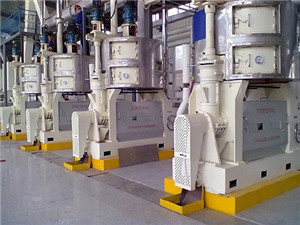
The intelligent temperature control system in high - efficiency corn germ oil presses is a revolutionary technology that has significantly transformed the corn germ oil production process. The core principle of this system lies in its ability to precisely regulate the temperature during the pressing process, which is crucial for maintaining the stability of the process and improving the purity of the oil.
The technology uses advanced sensors and algorithms to monitor and adjust the temperature in real - time. For example, it can detect changes in the temperature of the raw materials and the pressing chamber, and then make corresponding adjustments to ensure that the temperature remains within the optimal range. This not only improves the quality of the oil but also enhances the overall efficiency of the production process.
The first step in corn germ oil production is raw material pretreatment. Corn germ needs to be cleaned, dried, and tempered to ensure its moisture content and temperature are suitable for pressing. Generally, the moisture content of the corn germ should be controlled at around 8% - 12%, and the temperature should be around 30 - 40°C. This pretreatment process can improve the oil yield and quality.
During the pressing process, temperature control is the key. Different stages of the pressing process require different temperature settings. For example, in the initial pressing stage, the temperature can be set at around 60 - 70°C to ensure the smooth flow of the oil. As the pressing progresses, the temperature can be gradually increased to 80 - 90°C to improve the oil yield. However, the temperature should not exceed 100°C to avoid damaging the oil quality.
Pressing parameters such as pressure and speed also have a significant impact on the oil quality and production efficiency. By adjusting these parameters in combination with temperature control, the production process can be optimized. For example, increasing the pressure appropriately can improve the oil yield, but too high pressure may cause the oil to be contaminated with impurities. Therefore, a balance needs to be found between pressure and temperature.
After pressing, the oil needs to be separated from the residue. Temperature also plays an important role in this process. By controlling the temperature, the viscosity of the oil can be adjusted, making it easier to separate from the residue. Generally, the temperature during the oil separation process should be maintained at around 50 - 60°C.
Temperature control has a direct impact on the quality and stability of corn germ oil production. When the temperature is too high, the oil may be oxidized, resulting in a decrease in its purity and an increase in free fatty acid content. On the other hand, if the temperature is too low, the oil yield may be reduced, and the pressing process may become unstable.
For example, in a real - world case, a medium - sized corn germ oil production plant used to have problems with low oil quality and unstable production. After implementing the intelligent temperature control system, the oil purity increased by 10%, and the production stability improved significantly. The production efficiency also increased by about 15%.
In actual production, there are often some common problems, such as blockage of the pressing chamber and low oil yield. These problems can be solved by optimizing the pressing parameters. For example, if the pressing chamber is blocked, the temperature can be adjusted to reduce the viscosity of the raw materials, and the pressure can be increased appropriately to clear the blockage.
Another common problem is the low oil yield. By analyzing the temperature and other pressing parameters, the problem can often be traced back to improper temperature settings or incorrect pressing speed. By adjusting these parameters, the oil yield can be improved.
For small - scale production lines, the equipment configuration should be more flexible and cost - effective. The intelligent temperature control system can be adjusted according to the actual production scale to ensure that the production process is stable and efficient. For example, a small - scale production line may only need a simple temperature control device, which can be adjusted manually according to the production situation.
For large - scale production lines, more advanced and automated temperature control systems are required. These systems can be integrated with other production equipment to achieve full - process automation. For example, a large - scale production line may use a centralized control system to monitor and adjust the temperature of multiple pressing chambers simultaneously.
If you are a professional in the grain and oil processing industry and are seeking to improve the quality and production efficiency of corn germ oil, this article provides practical and operable guidance. For more in - depth technical information, please visit our official technical documentation or contact our customer service. We are committed to helping you achieve industrial upgrading and maximize benefits.
 364
|
364
|
 customized oilseed processing equipment
edible oil production solutions
advanced oil pressing technology
customized oilseed processing equipment
edible oil production solutions
advanced oil pressing technology
 191
|
oil press maintenance
automatic oil press operation
oil processing equipment care
small oil mill maintenance
oil press troubleshooting
191
|
oil press maintenance
automatic oil press operation
oil processing equipment care
small oil mill maintenance
oil press troubleshooting
 115
|
multifunctional peanut oil refining equipment
food safety compliant peanut oil refining solution
scalable refining equipment for oil mills
115
|
multifunctional peanut oil refining equipment
food safety compliant peanut oil refining solution
scalable refining equipment for oil mills
 218
|
multifunctional peanut oil refining equipment
peanut oil production solutions
industrial scale peanut oil refining
218
|
multifunctional peanut oil refining equipment
peanut oil production solutions
industrial scale peanut oil refining
 234
|
automatic peanut oil press machine
small peanut oil production line
peanut oil press installation tips
oil press machine troubleshooting
peanut oil extraction process
234
|
automatic peanut oil press machine
small peanut oil production line
peanut oil press installation tips
oil press machine troubleshooting
peanut oil extraction process