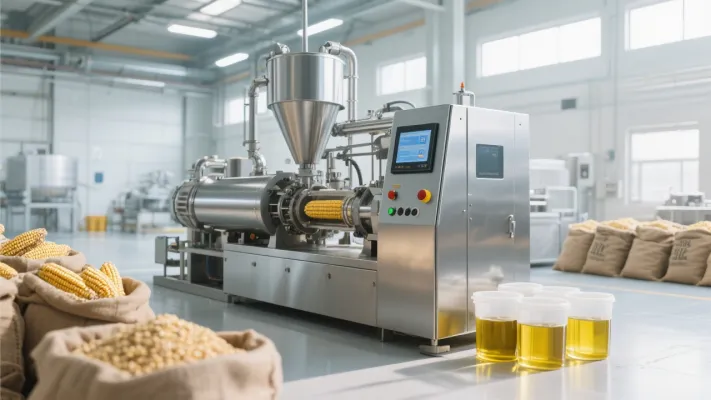
When it comes to producing high-value corn germ oil for international markets, the choice between cold-pressed and hot-pressed extraction methods isn’t just a technical detail—it’s a strategic decision that impacts yield, shelf life, nutritional integrity, and buyer trust. For exporters aiming to meet EU, North American, or Middle Eastern standards, understanding this difference is essential.
At its core, cold pressing keeps the temperature below 40°C (104°F), preserving natural enzymes, antioxidants like tocopherols, and volatile aroma compounds. In contrast, hot pressing typically operates between 70–95°C (158–203°F), which increases oil yield but degrades heat-sensitive nutrients.
| Parameter | Cold Pressed | Hot Pressed |
|---|---|---|
| Oil Yield (%) | 28–32% | 35–40% |
| Tocopherol Retention | ~90% | ~60% |
| Oxidative Stability (Rancimat, hours) | 18–24 | 12–16 |
While hot pressing offers higher throughput—especially in large-scale facilities—it often compromises on premium attributes valued by health-conscious consumers in Europe and the U.S. Cold-pressed oils are increasingly preferred in functional food and nutraceutical applications where purity matters more than raw volume.
Modern corn germ oil presses now feature intelligent thermal regulation systems that dynamically adjust pressure and heat based on real-time feedstock moisture content and kernel composition. This allows producers to switch between cold and hot modes without compromising efficiency—a key advantage for flexible production lines serving multiple export markets.
According to Lin Wei, a senior engineer at a Guangdong-based OEM facility, “We reduced energy consumption by 18% and improved consistency in our first-year rollout of adaptive temperature control. Buyers noticed the difference immediately—they asked for third-party lab reports.”
Common issues such as excessive foam formation during pressing or inconsistent viscosity can be resolved through precise temperature gradients and optimized screw speed settings. These aren’t just theoretical fixes—they’re proven solutions from field-tested operations across Southeast Asia and Latin America.
Small to mid-sized processors (5–20 tons/day) benefit most from modular cold-press units with integrated filtration and storage tanks. Larger plants (>30 tons/day) should consider hybrid systems that allow switching between low-temp pre-pressing and high-temp finishing stages to maximize both quality and output.
Regardless of scale, investing in smart sensors—not just mechanical parts—is what separates reliable producers from those struggling with batch variability. One Vietnamese exporter reported a 25% drop in customer complaints after installing IoT-enabled pressure monitoring across their entire press line.
Download our free technical guide on setting up efficient cold-pressed oil lines for export compliance and quality assurance.
Get Technical Guide & Expert Consultation




