As an engineer with years of experience in the maize germ oil processing industry, I'm excited to share some practical insights on quickly determining the moisture content of maize germ and matching it with the right pressing parameters. This is crucial for efficient and high - quality production of maize germ oil.
The moisture content of maize germ has a significant impact on the pressing effect. Generally, the ideal moisture content for maize germ before pressing should be between 8% - 12%. If the moisture content is too high, the oil will be prone to oxidation, and the oil color will become dark. On the other hand, if it's too low, the oil yield will be reduced.
"I've seen many cases where improper moisture content management led to a 10% - 15% reduction in oil yield," said an experienced engineer.
There are several ways to quickly detect the moisture content of maize germ on - site. One is the hand - feel method. If the germ feels soft and sticky, the moisture content is likely to be high. In contrast, if it's dry and brittle, the moisture content is low. Another common method is the drying test. You can dry a small sample of germ in an oven at a constant temperature (around 105°C) for about 2 - 3 hours. Then, calculate the moisture content by comparing the weight before and after drying.
In addition to these simple methods, using professional moisture detectors is also highly recommended. These detectors can provide accurate readings within a short time, which is very useful for large - scale production.
Temperature is another critical factor in the maize germ oil pressing process. If the temperature is set too high, the oil will oxidize quickly, resulting in a bad smell and reduced nutritional value. For example, when the temperature exceeds 120°C during the pressing process, the oxidation rate of unsaturated fatty acids in the oil can increase by 20% - 30%.
To correct temperature - related issues, we can use intelligent temperature control systems. These systems can adjust the temperature in real - time according to the moisture content and other parameters of the germ. For instance, when the moisture content is high, the system can slightly lower the temperature to prevent excessive oxidation.
The pressing pressure is directly related to the oil yield. Generally, the recommended pressing pressure for maize germ is between 30 - 50 MPa. When the pressure is below 30 MPa, the oil yield will be relatively low. As the pressure increases within this range, the oil yield will increase accordingly. However, if the pressure exceeds 50 MPa, it may damage the oil cells in the germ and cause the oil quality to decline.
The key to adjusting the pressure is to balance the oil yield and quality. We need to consider the characteristics of different batches of maize germ, such as particle size and moisture content, when adjusting the pressure.
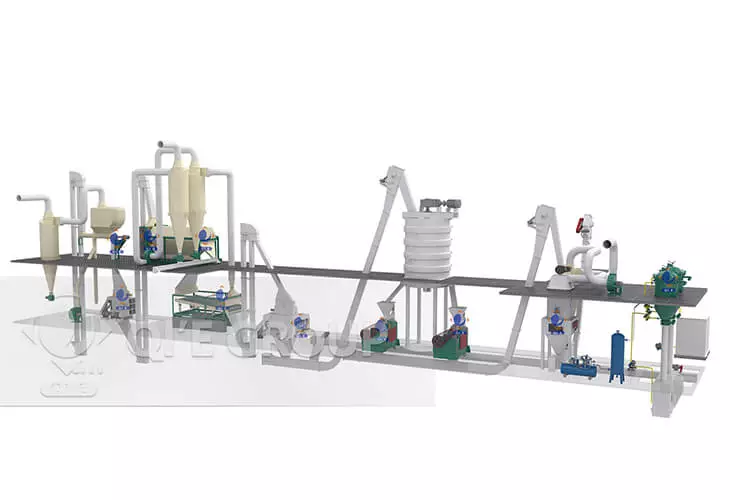
Small - scale and large - scale production lines have different requirements for equipment configuration. For small - scale production, simple and flexible equipment is more suitable. These equipment can be adjusted easily according to different production needs. On the other hand, large - scale production lines require more advanced and automated equipment, which can improve production efficiency and product quality.
Intelligent systems play a vital role in both small - and large - scale production. They can monitor and control various parameters in the production process, such as temperature, pressure, and moisture content, to ensure stable and efficient production.
If you want to learn more about the detailed technical information and practical operation guides in the maize germ oil processing process, please visit our official website or contact our customer service. We are committed to providing you with the most professional and reliable support.
 162
|
162
|
 multifunctional peanut oil refining equipment
food safety compliant peanut oil refining technology
refining equipment for small oil mills
multifunctional peanut oil refining equipment
food safety compliant peanut oil refining technology
refining equipment for small oil mills
 162
|
Corn germ oil pressing efficiency improvement techniques
Corn germ oil impurity超标 solution
Intelligent temperature control press application
Physical pressing process advantages
Cold pressing vs hot pressing comparison
162
|
Corn germ oil pressing efficiency improvement techniques
Corn germ oil impurity超标 solution
Intelligent temperature control press application
Physical pressing process advantages
Cold pressing vs hot pressing comparison
 397
|
seed pre-treatment and pressing equipment
efficient vegetable oil production solutions
customized oilseed processing machinery
397
|
seed pre-treatment and pressing equipment
efficient vegetable oil production solutions
customized oilseed processing machinery
.jpg?x-oss-process=image/resize,h_300,m_lfit/format,webp) 306
|
energy-efficient peanut oil press
high oil yield pressing machine
eco-friendly oil extraction technology
306
|
energy-efficient peanut oil press
high oil yield pressing machine
eco-friendly oil extraction technology
 421
|
multifunctional peanut oil refining equipment
food safety compliant refining technology
small scale oil mill processing equipment
421
|
multifunctional peanut oil refining equipment
food safety compliant refining technology
small scale oil mill processing equipment