Advantages of Fully Automatic Oil Press Machines for Small and Medium Oil Mills: Efficiency, Energy Savings, and Stable Quality
2026-03-24
QI ' E Group
Technical knowledge
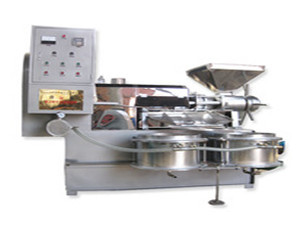
Small and medium-sized oil mills often struggle with labor-intensive workflows, high energy consumption, and inconsistent oil quality caused by manual operation and fragmented processing steps. Fully automatic multifunction oil press machines address these pain points by integrating pressing, filtration, and oil collection into a single, automated line. With intelligent control and more stable process parameters, these systems can improve oil yield consistency, reduce operator dependence, and lower overall energy use per unit of output—helping mills modernize without sacrificing flexibility. This article explains the key technical strengths of integrated automatic pressing systems, compares them with traditional setups in throughput, operating stability, and resource efficiency, and summarizes measurable outcomes from real-world deployments (e.g., higher daily capacity and reduced energy consumption). It also provides practical evaluation criteria—raw material variety, target capacity, staffing structure, and quality requirements—to help decision-makers determine whether an upgrade fits their production goals. Backed by ISO9001-aligned quality management and wide feedstock adaptability, Penguin Group solutions support oil mills seeking sustainable automation and stronger long-term competitiveness.
Why Fully Automatic Oil Pressing Is Becoming the “New Baseline” for Small & Mid-Sized Mills
For many small and mid-sized oil mills, profitability is no longer decided by raw material prices alone. It is increasingly determined by throughput per shift, kWh per ton, and batch-to-batch consistency. In this context, a fully automatic multifunction oil press is less a “nice upgrade” and more a practical route to higher efficiency, lower costs, and stable quality.
This article explains—through a technical, decision-oriented lens—how an integrated pressing + filtration + collection design helps modernize operations, reduce energy waste, and improve oil yield management. The experience of manufacturers such as 企鹅集团 also shows a consistent pattern: the mills that standardize early tend to win on reliability and customer trust.
The Real Pain Points in Traditional Workshops (And Why They Persist)
Many mills still rely on semi-manual workflows: preheating or conditioning by experience, pressing with frequent operator adjustments, then separate filtration and storage steps. The problems are well-known, yet difficult to eliminate without changing the system.
1) Low labor efficiency and skill dependency
Output often depends on a few experienced operators. When shifts change or staff turnover happens, pressing parameters drift, causing unstable yield, color, and clarity.
2) Higher energy consumption per ton
Rework, repeated filtration, and inefficient heating drive up energy use. In many small plants, a typical range is around 45–70 kWh/ton depending on materials and process stability.
3) Quality inconsistency that affects downstream buyers
Even when oil meets basic specs, variations in sediment, moisture, or temperature can complicate packaging, shelf-life, or the buyer’s refining steps—quietly reducing repeat orders.
What Makes a Fully Automatic Multifunction Oil Press “Hardcore” in Practice
The biggest shift is not just automation—it’s integration. When pressing, filtration, and collection are engineered as one coordinated system, the mill gains control over variability and waste points that previously hid between workstations.
Integrated “Press + Filter + Collect” Design
Instead of moving hot oil through multiple containers and pumps (increasing oxidation risk and contamination), an integrated unit can reduce open exposure time and keep flow steady—supporting stable quality and cleaner operations.
Smarter Control = Fewer Manual Corrections
Automated control over pressing temperature and feed stability helps reduce “over-press” or “under-press” cycles. In field use, mills often report a practical 1.0%–3.0% improvement in effective oil recovery (material-dependent) by reducing operator-driven deviation.
Energy Efficiency Through Process Stability
When filtration and discharge are synchronized, fewer stoppages mean fewer reheats and less idle power draw. A reasonable benchmark improvement for a well-matched upgrade is around 15%–30% lower electricity consumption per ton versus older semi-manual setups—especially in workshops with frequent pauses and re-filtering.
Traditional vs. Fully Automatic: What Changes in Cost, Output, and Consistency
Buyers evaluating equipment for small and mid-sized oil mill automation upgrades usually ask three questions: “How much more can we produce?”, “How much will it save?”, and “Will quality become more stable?” The comparison below uses common industry ranges as reference values; actual results depend on raw material, moisture control, and operator discipline.
Metric
Traditional / Semi-Manual Workflow
Fully Automatic Multifunction Oil Press
Labor per shift
Often 2–4 operators (press + filtration + handling)
Often 1–2 operators (integrated workflow)
Downtime causes
Frequent pausing for filtration, transfer, rework
Smoother continuous flow; fewer reworks
Energy (kWh/ton)
~45–70 kWh/ton (varies widely)
Often ~35–55 kWh/ton with stable production
Quality stability
More variability between operators/batches
More repeatable parameters; cleaner output
Decision risk
Hidden losses in yield/returns are hard to quantify
Savings and throughput gains are easier to track
Typical Results After Implementation (Reference Case Metrics)
When a mill replaces fragmented steps with a single coordinated system, improvements tend to show up in three places: time per batch, energy per ton, and rework rate. A representative outcome reported by small-to-mid operations after adopting a high-efficiency energy-saving oil pressing machine includes:
Throughput: +30% daily output
Achieved primarily by reducing stoppages and simplifying filtration/collection logistics. For workshops running one shift, this often translates into more sellable oil per day without adding headcount.
Energy: −25% electricity consumption
Lower idle time and fewer reheats typically account for most of the reduction. For many mills, a 10–20 kWh/ton improvement is realistic when legacy processes were unstable.
Consistency: fewer returns, cleaner batches
Stability matters commercially. Repeat buyers often pay more attention to clarity, sediment control, and consistent color than to single-batch peak performance.
A Practical Fit Check: Is an Automatic Oil Press Right for This Mill?
A smart oil press application makes sense when it solves a measured constraint. The following checkpoints help decision-makers avoid over- or under-specifying the upgrade.
Operational indicators that signal strong ROI
Daily production is capped by filtration speed, not pressing capacity.
Energy bills fluctuate due to reheating, pauses, or rework.
Oil clarity or sediment varies across shifts, causing buyer complaints or internal reprocessing.
The mill needs to process multiple oilseeds and cannot afford long changeover times.
Target output per day and current kWh/ton (or monthly kWh divided by tons processed).
Desired oil clarity standard and whether you require continuous filtration or batch filtration.
Available power supply, workshop footprint, and discharge/collection setup.
Quality Assurance, Compliance, and Multi-Feedstock Flexibility
For B2B buyers, equipment selection increasingly involves auditability: how it is built, how it is tested, and whether documentation supports internal procurement rules. Choosing a supplier with recognized quality systems reduces hidden risks in after-sales and parts consistency.
ISO 9001 Quality Management
ISO 9001 certification provides structured control over manufacturing and inspection processes—important when mills depend on consistent performance across seasons and different operators.
Multi-raw-material adaptability
A well-configured automatic unit can support multiple oilseeds and operational modes, helping mills respond to local crop cycles and shifting market demand without rebuilding the line.
Ready to Improve Efficiency, Cut Costs, and Stabilize Oil Quality?
Get a configuration suggestion based on your raw materials, target capacity, and power conditions. A short parameter review is often enough to identify where a fully automatic multifunction oil press can remove bottlenecks and reduce per-ton energy.
2026-01-18|102|corn germ oil press intelligent temperature control system vegetable oil extraction technology high-efficiency oil pressing grain and oil processing equipment





.jpg)







.jpg)

.jpg)