This article systematically analyzes the practical operation of high - efficiency corn germ oil presses. It focuses on technical details such as the determination of raw material moisture content, the application of intelligent temperature control, and the optimization of pressing parameters. These details help users improve the production efficiency of corn germ oil and the quality of the oil.
The operation of a high - efficiency corn germ oil press involves several key aspects, starting from raw material pre - treatment to the regulation of pressing process parameters. The intelligent temperature control system plays a crucial role in different environments. For example, in a cold environment, the system needs to increase the temperature to a certain level to ensure the proper fluidity of the oil. According to the experience of front - line engineers, in a winter environment with an average temperature of about 5°C, the intelligent temperature control system can increase the temperature inside the press to around 80 - 90°C, which significantly improves the oil quality.
There is a quantitative relationship between pressing pressure, time, and oil yield. Through a series of experiments, it has been found that when the pressing pressure is increased from 10 MPa to 20 MPa, and the pressing time is extended from 30 minutes to 60 minutes, the oil yield can increase from about 30% to 40%. However, excessive pressure and time may also lead to some negative effects, such as reducing the purity of the oil.
| Pressing Pressure (MPa) | Pressing Time (minutes) | Oil Yield (%) |
|---|---|---|
| 10 | 30 | 30 |
| 15 | 45 | 35 |
| 20 | 60 | 40 |
Determining the moisture content of materials is a critical step. Front - line engineers have shared some quick judgment skills. One common method is to touch the raw materials with hands. If the materials feel slightly damp and stick together, the moisture content is relatively high. On the contrary, if they are dry and loose, the moisture content is low. However, this method is only a rough estimate. A more accurate way is to use a moisture meter. The ideal moisture content of corn germ for oil pressing is about 8 - 12%. If the moisture content is too high, it may lead to a lower oil yield and affect the quality of the oil.
During the operation of the press, there are some common error scenarios. For example, incorrect temperature settings may lead to poor oil quality. If the temperature is too low, the oil may not be fully extracted; if it is too high, the oil may be oxidized. Another common error is the misjudgment of the moisture content of materials. To correct these errors, operators should regularly check the parameters of the press and use professional equipment for accurate measurement.
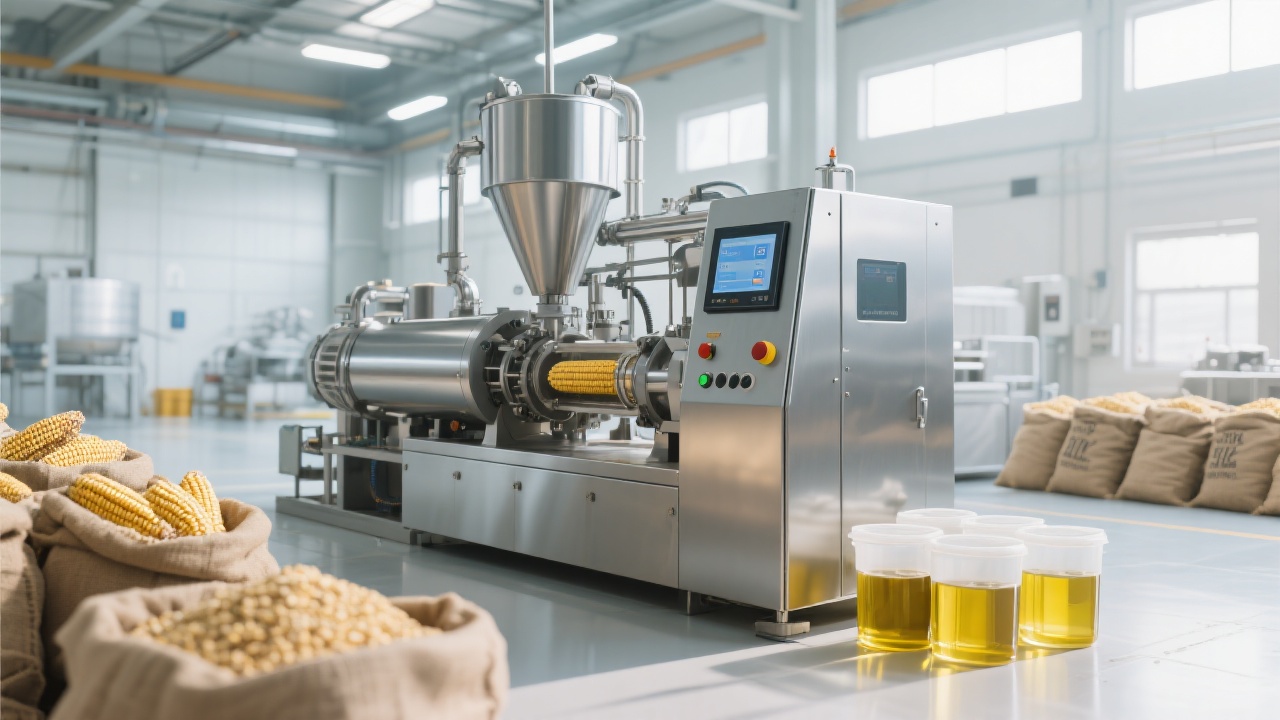
Based on the flexibility of equipment configuration for different - scale production lines, this article provides targeted solutions. Small - scale production lines may require more manual operation and simple equipment, while large - scale production lines need more automated and intelligent equipment. For small - scale production lines with an annual output of less than 100 tons, a relatively simple press with manual temperature control can be used. For large - scale production lines with an annual output of more than 1000 tons, a fully automated press with an intelligent temperature control system is recommended.
Q: How to quickly judge the moisture content of corn germ?
A: You can use the hand - touch method as a rough estimate. If it feels slightly damp and sticky, the moisture content is high. For a more accurate result, use a moisture meter.
Q: What is the optimal pressing pressure and time for a high oil yield?
A: Generally, a pressing pressure of 15 - 20 MPa and a pressing time of 45 - 60 minutes can achieve a relatively high oil yield, but it also depends on the specific characteristics of the raw materials.
If you want to learn more about the operation and optimization of corn germ oil presses, please visit our technical documents and contact our online customer service.





