If your vegetable oil press machine is producing less oil than expected, the issue is rarely “the machine is weak.” In most plants, low yield is a process mismatch: raw material condition, press temperature/pressure balance, and downstream refining losses quietly eat your recovery. The good news: you can often recover 3–8 percentage points of yield with disciplined adjustments—without changing your entire line.
Decision-stage note: In typical soybean/sunflower/rapeseed operations, a “small” yield gap (e.g., 42% vs 48% on soybean oil) can translate into a major annual profit swing because raw material cost dominates total cost.
When buyers say “low oil extraction,” they often mix three different losses: (1) mechanical extraction loss (too much oil left in cake), (2) processing loss (oil trapped by emulsion/gums/solids), and (3) refining loss (avoidable neutral oil lost in soapstock, spent earth, or filtration). If you only adjust the press but ignore refining, you may “increase pressing output” while your net recoverable oil barely moves.
| Loss Point | What You See on the Floor | Typical Cause | Quick Diagnostic |
|---|---|---|---|
| High residual oil in cake | Cake looks greasy, soft, or uneven | Moisture off-range; wrong particle size; temperature/pressure mismatch | Soxhlet or NMR spot check on cake (target varies by seed) |
| Oil losses in crude handling | More sludge, slower settling, cloudy oil | Too many fines; poor filtration/settling design; temperature too low | Measure insoluble impurities (%) and sediment volume |
| Refining neutral oil loss | Soapstock heavy; bleaching earth consumption spikes | Overdosing caustic; wrong hydration; adsorption overdosed; poor separation | Track “neutral oil in soapstock” and spent earth oil retention |

If you’re chasing low yield, start with the one variable that silently sets the ceiling: pretreatment consistency. Even a high-performance press can’t compensate for raw material that is too wet, too dry, under-cracked, or full of fines. The most common pattern we see: a plant tunes screw speed and choke pressure, but the incoming seed changes daily—so yield swings and operators “fight the press.”
For many oilseeds, the ideal moisture for pressing is narrower than teams expect. As a practical reference: soybean often performs well around 9–11%, rapeseed/canola around 6–8%, sunflower around 7–9% (actual targets depend on variety and hull fraction). Too wet increases emulsions and reduces frictional heat; too dry makes cake brittle and can limit oil flow or raise fines. Your goal is not a universal number—it’s a stable number.
Operator-level test: If cake exits warm but looks “spongy” and oil appears hazy with higher sediment, suspect moisture too high or excessive fines. If cake is overly powdery with unstable press load, suspect moisture too low or over-crushing.
Pressing works when oil-bearing cells are ruptured and oil can migrate under pressure. Under-cracked material leaves oil locked in intact cells; over-cracked material creates fines that clog channels, increase sludge, and increase refining losses. Many plants improve yield by implementing a simple KPI: screen analysis per shift (coarse / target / fines).
Conditioning isn’t just heating; it’s controlled heat transfer and moisture distribution over time. As a reference, many operations condition meal in the 60–90°C range (seed-dependent) long enough for uniformity. Inconsistent conditioning often shows up as press amperage fluctuations and uneven cake structure across the length of the barrel.
After pretreatment, the second big lever is the temperature-pressure-speed triangle. In screw pressing, you’re managing viscosity, frictional heat, and drainage pathways at the same time. Many “low yield” complaints are actually conservative settings chosen to avoid blockages—resulting in higher residual oil in cake.
| Symptom | Likely Process Cause | Adjustment Direction | What to Monitor |
|---|---|---|---|
| Cake greasy, residual oil high | Pressure too low; meal too cold; residence time too short | Increase pressure; raise conditioning temp; reduce screw speed slightly | Cake oil %, motor load, oil clarity |
| Frequent choking / overload | Too many fines; pressure too high; moisture too low | Reduce pressure; optimize cracking; adjust moisture upward slightly | Amps spikes, temperature rise, cake continuity |
| Oil cloudy, high sediment | Fines carryover; oil too cool; filtration overloaded | Improve screening; raise oil handling temp; upgrade filtration routine | Sediment %, filtration ΔP, settling time |
Where automatic temperature control helps: With stable barrel and conditioning temperatures, you reduce operator “over-correction.” On lines using automated temperature control loops, it’s common to see 1–3% higher net oil recovery simply from reduced variability, especially when raw material lots change. Qie Group designs many of its oil pressing configurations to support repeatable thermal control rather than relying on operator feel alone.
If you only evaluate yield at the press discharge, you miss a big part of the story. In real plants, refining choices can change net yield by 0.5–2.5% (sometimes more) depending on crude oil quality. The biggest “hidden” losses typically occur during degumming, neutralization (deacidification), bleaching, and filtration.
High phospholipids and mucilaginous materials can form stable emulsions, pulling neutral oil into gums/sludge. A practical approach is to treat degumming as a controlled reaction: correct hydration water, mixing intensity, and separation temperature. Many operators see clearer separation when crude oil is held in the 70–85°C range during hydration (process-dependent).
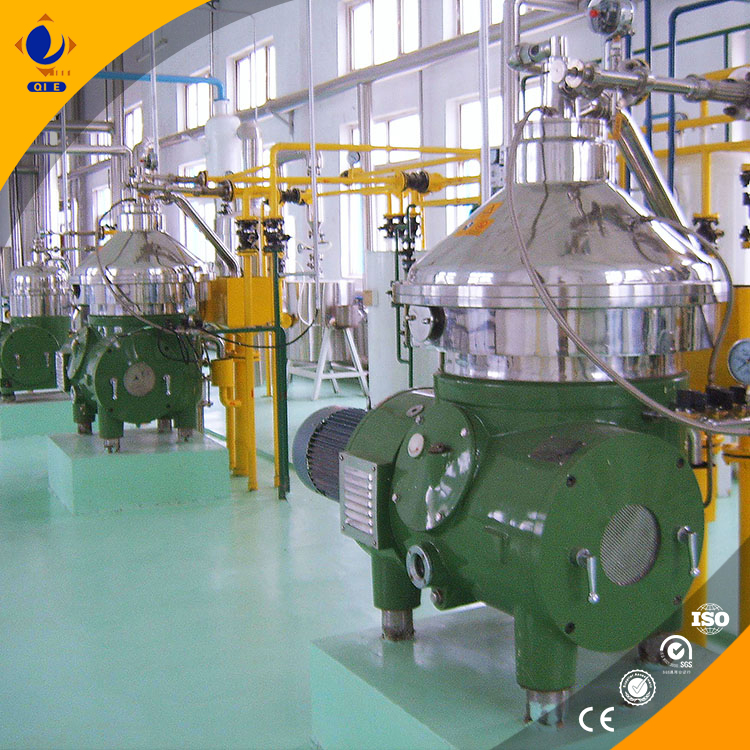
Overdosing caustic soda reduces FFA fast—but it also increases soapstock volume and drags neutral oil with it. If your lab data shows FFA control is good but overall yield is low, check: soapstock oil content, separation time, and centrifuge/settler performance. In many edible oil lines, tightening neutralization control can reduce neutral oil loss by 0.3–1.2%.
Bleaching earth and carbon improve color and trace contaminant control—but they also hold oil. A common range for oil retention in spent bleaching earth is 20–35% by weight of earth depending on filtration method and oil viscosity. Optimizing dosage, contact time, and filtration temperature can cut adsorption-related losses while maintaining specs.
Net recoverable oil ≈ Press oil output + recoverable oil from solids separation − (oil in cake + oil in sludge/gums + neutral oil in soapstock + oil retained in spent earth). If you don’t measure at least two downstream loss points, you’re optimizing blind.
Here is a reference-style comparison based on common industrial observations in oilseed pressing lines (your results depend on seed variety, initial oil content, and equipment configuration). In one typical soybean line, improvements in pretreatment consistency + temperature/pressure matching can move performance from ~42% to ~48% apparent yield—often by reducing residual oil in cake and stabilizing press load.
| Metric | Before Optimization (Example) | After Optimization (Example) | What Changed |
|---|---|---|---|
| Apparent soybean oil yield | ~42% | ~48% | Moisture stabilized; better conditioning; pressure profile tuned |
| Residual oil in cake (spot check) | 6–8% | 4–6% | Less under-pressing; fewer fines-induced channels |
| Unplanned downtime related to choking | 2–4 events/week | 0–1 event/week | Feed stability + better cracking distribution |
In Qie Group projects across multiple regions, the most consistent outcome is not a single “magic parameter,” but a repeatable operating envelope. That’s why many customers report an average improvement of 15%+ in oil yield performance indicators after process optimization and equipment matching—supported by installations serving clients in 120+ countries.
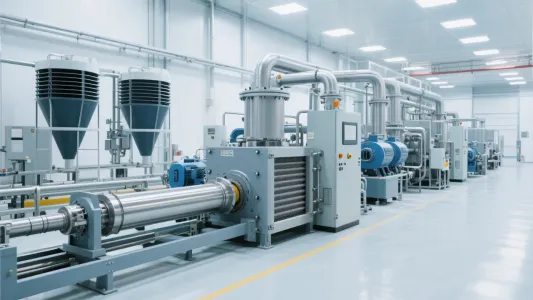
Even with the perfect process, yield slowly drifts if wear and cleanliness aren’t controlled. In screw pressing, wear changes the internal clearances and pressure build-up, so your “known good” settings stop behaving the same. If your yield dropped gradually over weeks, suspect mechanical and housekeeping factors—not raw material.
Tip: If you’re improving yield, create a “golden batch” record: seed type, moisture, screen analysis, conditioning temperature, press settings, and crude oil impurity. That record becomes your fastest troubleshooting tool when the next shipment behaves differently.
If you tell us your seed type, capacity, current yield, cake oil %, and whether you refine in-house, we can help you pinpoint where your oil is being lost—pretreatment, pressing, or refining. This is usually faster (and cheaper) than trial-and-error adjustments that disrupt production.
Get a process-matched configuration (pretreatment + pressing + refining interfaces) and an operating envelope designed for stable, high extraction efficiency.
Suggested info to share: seed (soybean/sunflower/rapeseed), moisture %, capacity (t/day), current yield %, cake oil %, and your refining steps (degumming/neutralization/bleaching).
What’s the hardest issue you’re facing right now—high cake oil, unstable press load, cloudy crude oil, or refining losses?

 175
|
175
|
 multifunctional peanut oil refining equipment
eco-friendly peanut oil refining solutions
equipment for small oil mills
multifunctional peanut oil refining equipment
eco-friendly peanut oil refining solutions
equipment for small oil mills
 74
|
Fully Automatic Peanut Oil Production Line
Peanut Oil Press Machine
High Efficiency Peanut Oil Extraction
Peanut Oil Production Equipment
Automated Peanut Oil Processing Solution
Peanut Oil Refining Equipment
Energy Efficient Peanut Oil Production
Peanut Oil Processing Industry
Peanut Oil Manufacturing Technology
74
|
Fully Automatic Peanut Oil Production Line
Peanut Oil Press Machine
High Efficiency Peanut Oil Extraction
Peanut Oil Production Equipment
Automated Peanut Oil Processing Solution
Peanut Oil Refining Equipment
Energy Efficient Peanut Oil Production
Peanut Oil Processing Industry
Peanut Oil Manufacturing Technology
 359
|
oil press equipment selection
small and medium oil mills
oil extraction efficiency improvement
multifunctional oil press machine
oil production machinery
343
|
multi-functional peanut oil refining equipment
industrial scale peanut oil refining solutions
peanut oil refining equipment for small oil mills
359
|
oil press equipment selection
small and medium oil mills
oil extraction efficiency improvement
multifunctional oil press machine
oil production machinery
343
|
multi-functional peanut oil refining equipment
industrial scale peanut oil refining solutions
peanut oil refining equipment for small oil mills
 232
|
multi-functional peanut oil refining equipment
food safety compliant peanut oil processor
refining equipment for various scale oil mills
232
|
multi-functional peanut oil refining equipment
food safety compliant peanut oil processor
refining equipment for various scale oil mills