In most edible oil plants, performance does not collapse in one dramatic failure—it erodes quietly: a few points of oil left in the cake, a slightly unstable vacuum during deodorization, a heat exchanger that can’t hold design ΔT, or an operator compensating for inconsistent feed. Over months, those “small” issues translate into lower extraction yield, higher steam and power consumption, and more frequent quality nonconformities.
This guide explains the technical principles of vegetable oil processing machinery and offers an operator-friendly, engineer-approved approach to improving oil extraction efficiency, stabilizing refining, and meeting common international food safety and hygiene expectations. The focus stays on mechanisms, controls, and practical decisions—useful for plant engineers, equipment buyers, and small-to-mid-size producers comparing process routes.
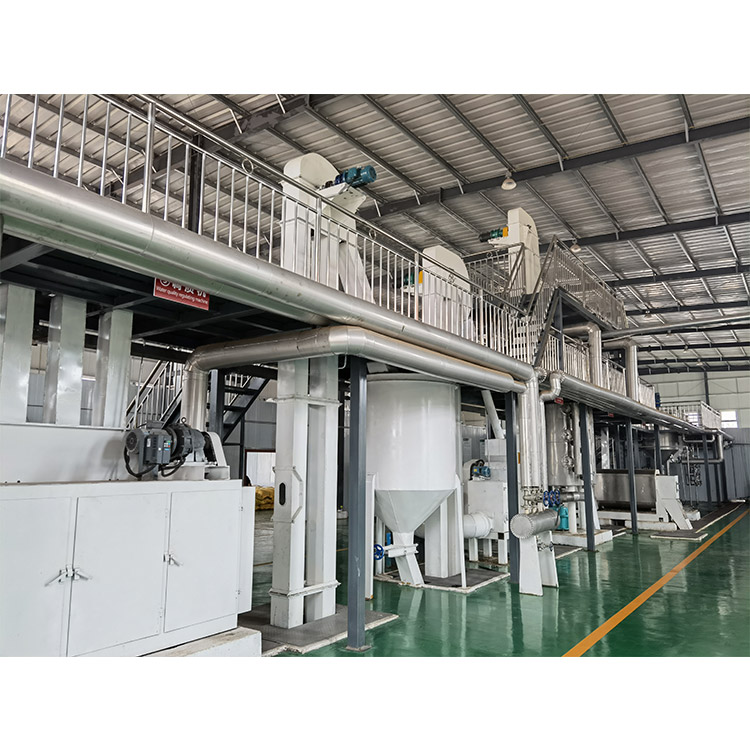
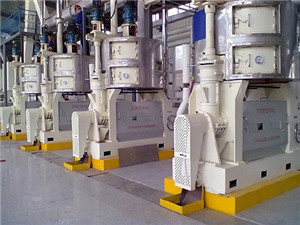
A typical plant oil production line can be simplified into a repeatable flow: pre-treatment → pressing (or pre-pressing) → clarification/filtration → refining (degumming, neutralization or physical route, bleaching, deodorization) → polishing filtration → storage. Each block has a different “physics,” so the machinery design priorities also differ.
| Stage | Primary objective | Typical control lever | Common hidden loss |
|---|---|---|---|
| Pre-treatment / conditioning | Make oil “releasable” without cooking quality | Moisture & temperature profile; flake thickness | Over/under-conditioning causes high cake residual oil |
| Screw pressing | Maximize expression while keeping stable throughput | Backpressure, speed, choke, press cage gap | Excess fines → filtration overload; heat rise → quality drift |
| Clarification / filtration | Remove solids, gums, soaps before refining | Differential pressure, filter aid, temperature | Oil trapped in sludge/cake; frequent filter changes |
| Refining & deodorization | Meet specs: FFA, color, odor, contaminants | Vacuum stability, steam rate, contact time, adsorbent | Over-stripping, poor heat recovery, high neutral oil loss |
For decision-makers, the most practical question is: Where is the plant paying hidden “tax”—in residual oil, utilities, downtime, or rework? The sections below unpack the mechanical and control choices that most often unlock measurable gains.
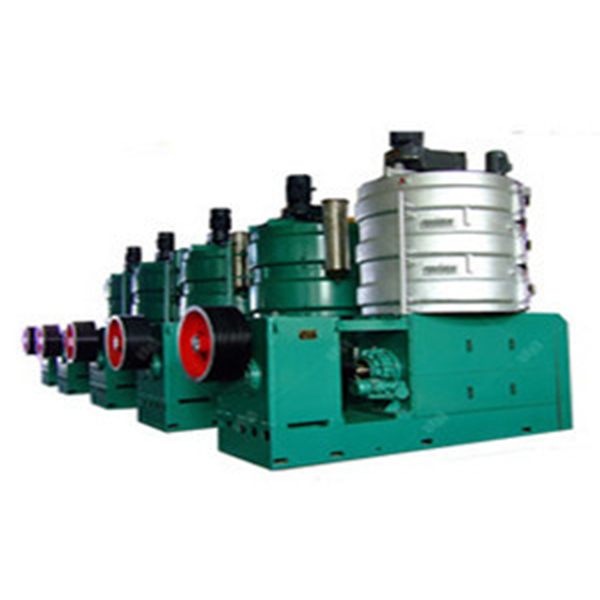
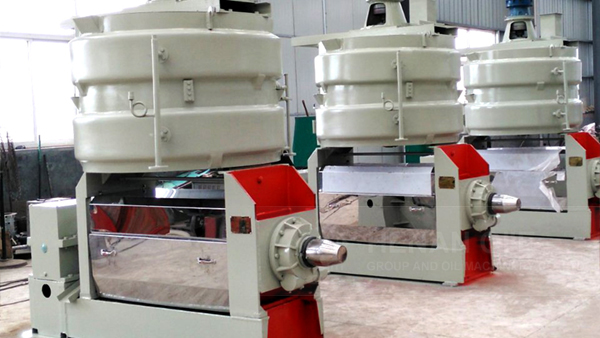
In a screw press, extraction is essentially a controlled “squeeze” under progressively increasing pressure. The machinery must simultaneously manage compression, shear, drainage, and heat generation. The best-performing presses are not simply “stronger”—they are better at controlling how pressure builds and how oil escapes.
Key structural elements include the worm shaft geometry, press cage (bar spacing), and the choke/end cone. A practical way to think about it: the worm is the “pump,” the cage is the “filter wall,” and the choke is the “valve” that sets backpressure. If any one of these is mismatched to the seed type and pre-treatment, the press either floods with fines or starves the drainage path.
Worm pitch & root diameter: determines compression gradient. A smoother gradient often stabilizes throughput and reduces sudden heat spikes.
Cage bar spacing: tighter gaps help reduce solids in oil but can increase choking if the meal is too wet or too fine.
Choke adjustment: sets backpressure; too tight elevates temperature and power draw, too loose leaves oil in cake.
Many plants chase yield by tightening the choke. That works—until it doesn’t. A more reliable method is to manage the inputs that shape press behavior:
Plants often track yield indirectly through residual oil in cake and specific energy. As a practical reference:
If crude oil carries too many fines, gums, or moisture, refining becomes a “clean-up mission” with higher chemical usage, higher oil loss in soapstock, and more frequent filter issues. Clarification is therefore not housekeeping; it is a yield and compliance lever.
While exact specifications differ by oil type, plants commonly aim to reduce visible solids and stabilize moisture before sensitive refining steps. Operationally, this means controlling:
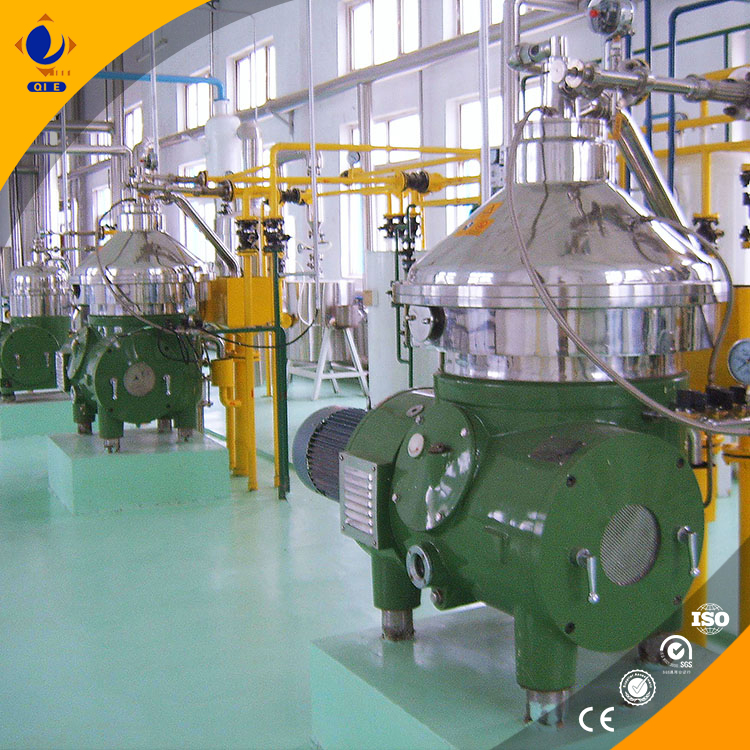
Refining is where food-grade expectations become non-negotiable. For most edible oils, the core machinery must consistently manage mixing intensity, residence time, temperature, and vacuum integrity. Small deviations can cause large quality swings: unstable color, higher FFA, residual soaps, off-odors, or shortened shelf life.
Degumming removes phospholipids and trace impurities that otherwise form emulsions and increase refining losses. Mechanically, the most overlooked factor is controlled mixing: enough shear to disperse water/acid uniformly, but not so much that stable emulsions form. Well-designed inline mixers and properly sized retention tanks reduce separation time and improve centrifuge performance.
Chemical neutralization removes free fatty acids (FFA) by converting them to soapstock, while physical refining removes FFA largely by steam stripping under deep vacuum. From a machinery standpoint:
Data point for planning: In many continuous deodorization systems, maintaining vacuum around 2–6 mbar and oil temperature typically in the 180–240°C range is common practice (oil-dependent). Instability here often shows up as odor carryover, higher steam consumption, and inconsistent final moisture.
Bleaching is adsorption plus filtration. Deodorization is mass transfer under vacuum. Both are sensitive to temperature uniformity and oxygen exposure. Two practical engineering moves repeatedly pay off:
Automation in vegetable oil processing is not about removing people; it is about making output independent of who is on shift. Plants using basic PLC/SCADA control typically target three outcomes: stable throughput, lower utility variance, and traceable compliance records.
“Green” upgrades are easiest to justify when they reduce cost per ton. In edible oil plants, the fastest payback usually comes from heat recovery, insulation, VFD optimization, and loss reduction (oil in sludge, soapstock, and filter cake).
Most production issues present as symptoms—high cake oil, dark oil, frequent filter blocking, unstable deodorizer vacuum. The fastest teams troubleshoot in a fixed order: raw material → pre-treatment → pressing mechanics → separation → refining controls. Skipping steps usually wastes time.
| Symptom | Likely root causes | First actions |
|---|---|---|
| High residual oil in cake | Under-conditioning, worn worm/cage, choke too loose, unstable feed | Check moisture/temp, verify press wear, stabilize feed rate, adjust choke incrementally |
| Oil too dark after pressing | Overheating in press, excessive friction, long residence time, oxidized feed | Review barrel temps, reduce choke, inspect bearings, check raw material storage |
| Filters block frequently | High fines from press, low filtration temperature, wrong pre-coat/filter aid | Raise filtration temp, inspect cage gaps/wear, optimize pre-coat and ΔP control |
| Unstable deodorizer vacuum | Air leaks, condenser fouling, cooling water issues, pump wear | Leak test, clean condenser, verify cooling water, check vacuum pump performance |
| Higher than expected chemical use | Poor degumming, high gums/solids, dosing drift, mixing issues | Confirm crude oil quality, calibrate dosing, check mixer shear and retention time |
Press wear is often treated as a “later” problem until yield quietly collapses. A preventive approach is more predictable:
Buyers and auditors increasingly expect edible oil facilities to demonstrate consistent control over hazards and quality parameters—not only final test reports. In practice, oil plants commonly align operations with recognized systems such as HACCP and ISO 22000, plus internal specifications for FFA, moisture/volatiles, insoluble impurities, and trace contaminants.
A mid-size plant notices that daily crude oil output has fallen by about 1.5–2.0% over two months. The press is still running, the motor doesn’t trip, and the operators compensate by tightening the choke. Soon after, filtration differential pressure increases and the oil color becomes less stable.
In field audits, this pattern commonly points to a combined issue: press wear + conditioning drift. Tightening the choke hides the yield loss short-term but increases fines and heat, pushing the problem into filtration and refining. A structured response is to verify conditioning moisture/temperature, measure press wear, and restore drainage performance before increasing backpressure.
Q&A prompt for your plant: What seed type(s) are being processed, and what is the current cake residual oil percentage? With just those two inputs (plus press model and throughput), it becomes possible to narrow down the most likely mechanical vs. process causes and propose a realistic adjustment plan.
For procurement and technical teams comparing options, the fastest way to avoid mismatched machinery is a short, seed-specific checklist covering press configuration, filtration sizing, refining route, automation points, and compliance considerations.
Get the Vegetable Oil Processing Machinery Technical Datasheet & Line Configuration GuidePrefer a quick consultation? Share your seed type, target capacity (tons/day), and desired oil quality specs to receive a practical configuration suggestion.
 317
|
317
|
 peanut oil quality control
ISO 22000 certification
HACCP certification
automated oil pressing technology
export market compliance
peanut oil quality control
ISO 22000 certification
HACCP certification
automated oil pressing technology
export market compliance
 175
|
seed preprocessing production line
efficient plant oil processing solutions
versatile oilseed processing equipment
175
|
seed preprocessing production line
efficient plant oil processing solutions
versatile oilseed processing equipment
 282
|
Multifunctional peanut oil refining equipment
food safety standards compliance
high-efficiency oil refining equipment
282
|
Multifunctional peanut oil refining equipment
food safety standards compliance
high-efficiency oil refining equipment
 460
|
Peanut Oil Press Machine
Automatic Peanut Oil Press Machine
Soybean Oil Press Machine
Cold Press Peanut Oil Machine
High-Efficiency Oil Extraction Machine
Low Temperature Oil Processing Machine
Multi-Purpose Oil Press Machine
Oil Extraction Equipment for Small Oil Mills
Reliable Oil Press Machine
ISO9001 Certified Oil Press
460
|
Peanut Oil Press Machine
Automatic Peanut Oil Press Machine
Soybean Oil Press Machine
Cold Press Peanut Oil Machine
High-Efficiency Oil Extraction Machine
Low Temperature Oil Processing Machine
Multi-Purpose Oil Press Machine
Oil Extraction Equipment for Small Oil Mills
Reliable Oil Press Machine
ISO9001 Certified Oil Press
 359
|
oil press equipment selection
small and medium oil mills
oil extraction efficiency improvement
multifunctional oil press machine
oil production machinery
359
|
oil press equipment selection
small and medium oil mills
oil extraction efficiency improvement
multifunctional oil press machine
oil production machinery